

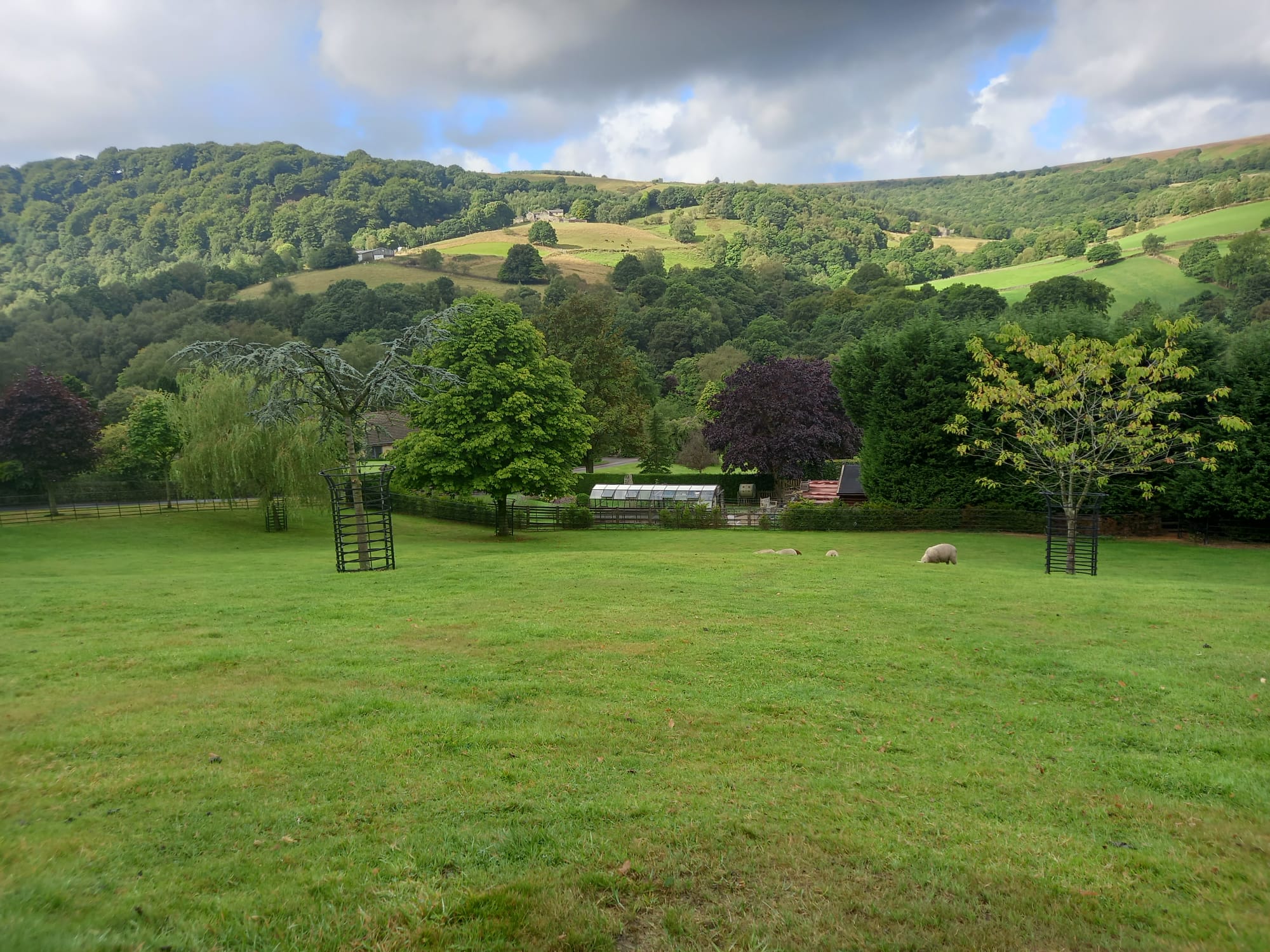
Tree guards are often an overlooked yet vital part of tree planting and estate management. Whether it’s to protect a tree trunk from animals or simply for aesthetic purposes, tree guards can help to transform the look of your space. In this guide, we’ll explain the core purpose of tree guards, the different types and how to choose the right guard for your project.
Why trees need guards
While housing trees on your property can look great, they can also attract a range of threats, such as deer damage, livestock browsing, rabbit or hare bark stripping, lawn mower and strimmer strikes and vandalism. Young trees are even more at risk and have been shown to have a significantly lower survival rate if they’re left unprotected. Protective tree fencing can help shield your trees from these threats, preserving their integrity.
Why choose steel over other materials
Compared to other materials, such as plastic, mesh and timber, steel is much longer lasting, and we’re not just talking a few years – we mean decades. It is a much stronger way to manufacture tree guards, whilst also providing a much more professional and sleek appearance. Steel can also be galvanised or painted for extra corrosion resistance and colour matching.
When looking at investing in tree guards, strength and durability should be at the forefront of your decision-making. Without these qualities, your trees won’t be protected properly, and threats from animals and humans will remain high.
Types of steel tree guard
There are 4 common types of steel tree guards:
Estate-style round/square guards: usually an open framework, and are most suitable for parkland and formal grounds.
Tall deer guards: made with taller mesh or railings, designed to prevent browsing from above head height.
Decorative bespoke guards: ornamental designs, usually for heritage settings, churchyards and public spaces.
Low guards/bollard rings: commonly found in car parks or gardens to protect from pet damage.
The tree species and threat type will determine the chosen size of your tree guard. For example, someone looking to protect their trees from animals such as deer may benefit from taller tree guards.
Choosing the right guard for your project
Choosing the right type of tree guard is often overcomplicated. Still, it actually can be an easy process if you break your decision down into 4 categories: the type of threat the tree is exposed to, the setting, your aesthetic preferences and choices, and whether you want the guards to be permanent or temporary. These answers will help determine which size, height, and shape suit your needs best and reveal a range of options that work for you.
Our tree guards
Tree guards are becoming increasingly popular amongst landowners. Whether for protection or simply aesthetic purposes, they can add a sleek yet functional element to your space. We offer a bespoke tree guard service, manufactured to your exact size requirements, making it the perfect choice for larger or more complex trees that still need protection.


Recent Comments